Some Thoughts on the College Football Playoff, College Athletics, and Realignment

A common refrain among college athletics is that realignment never stops. The chaos doesn’t stop either, especially in college football. I haven’t provided an extensive opinion on anything college sports-related since summer 2025, when I wrote about the streaming trend in NCAA Division 2 and 3, a sentiment that hasn’t changed since then. I’ve stayed up on the news, as noted by the ongoing Realignment Report published twice a month. I figured now would be a good time to add to the ongoing discussions since I’ve built up enough scattered thoughts to discuss various hot-button topics. Let’s start with the College Football Playoff.
College Football Playoff Expansion Thoughts
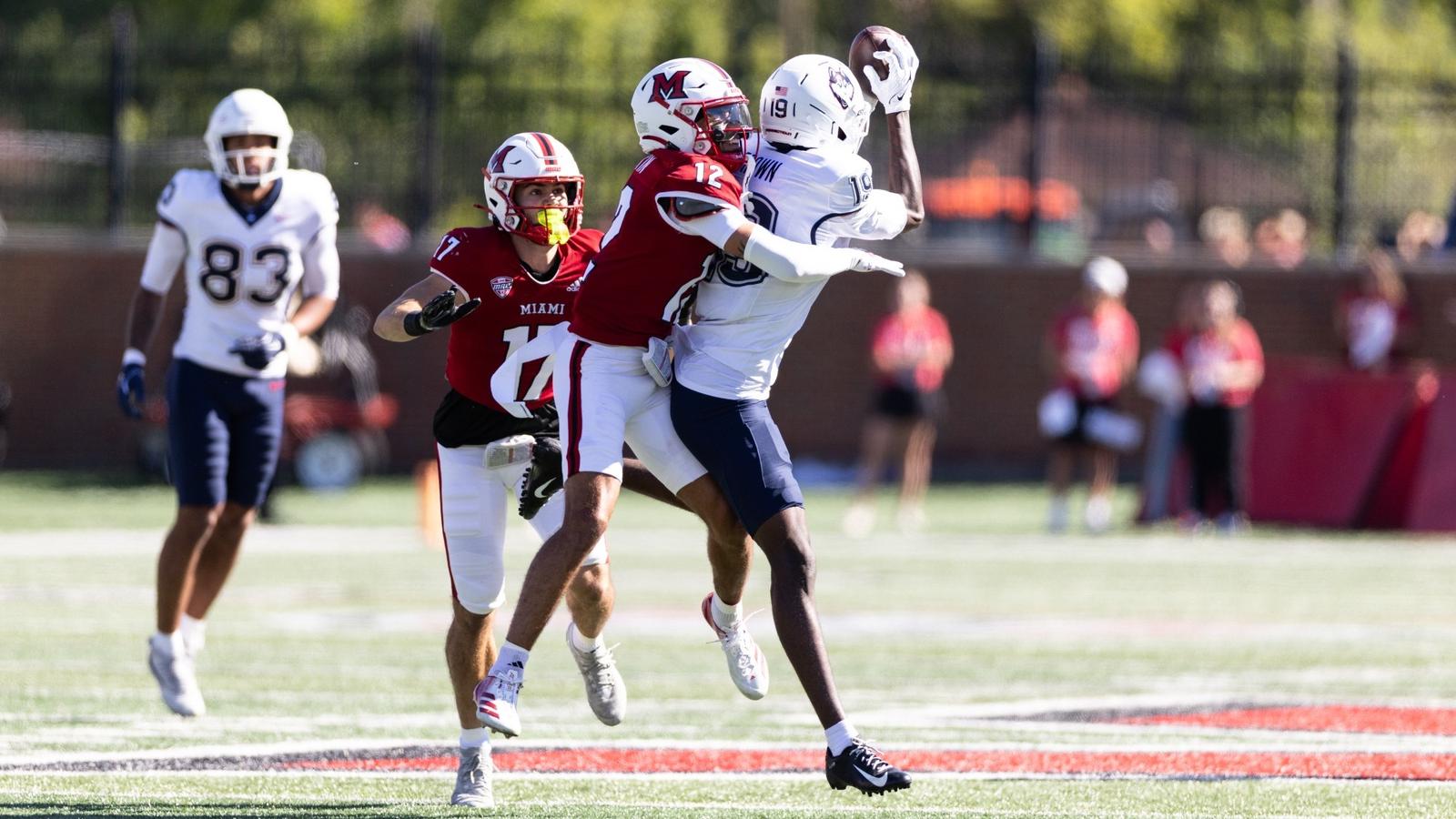
There are ongoing discussions to expand the current 12-team College Football Playoff to either 16 or 24 teams, with the 24-team option in the driver’s seat. This is no surprise to me because everything that’s happened in college football (and in most of college athletics by extension) is to extract as much revenue as possible. It’s All About the Benjamins. There are likely to be two casualties of a 24-team playoff. One is the conference championship games, as we already know from previous reporting. The other is the bowl system.
If you are going to expand the CFP, why stop at 24 teams? Go to 32, give every conference champion an automatic bid, and leave the remaining 22 spots for at-large bids. Have the Round of 32 and Round of 16 at campus sites, with the Quarterfinals, Semifinals, and National Championship at one of the predetermined neutral sites. The answer, of course, is money. They have to establish the “value” of the 24-team playoff before they can extract more TV rights money with 32 teams. I think expansion will happen until there are 32 or 40 teams… unless there’s some sort of “Super League” or breakaway, which I’ll talk about later. Why keep expanding? Money, of course. If TV networks are willing to continue shelling out big bucks, I don’t see the current college athletic leaders turning down higher revenue.
Bowl games are likely to change drastically, if not end entirely. An article by Ross Dellenger said a 10-bowl game schedule is being planned, featuring power conference programs. The media rights would be controlled by the leagues instead of the bowls under this change. The bowls have lost some luster due to the Playoff system and the increasing player opt-outs each season. I personally don’t watch as many bowl games anymore, in part because of the CFP, but also because I just have less interest in them. I can’t say I’d be more willing to watch them if it were comprised of 20 power conference teams either.
Personally… I’m indifferent about whether or how much the playoff field should expand. At 12, 16, 24, 32, or 40, the regular season is devalued more than in previous systems. A loss in a four-team playoff was usually enough to end most teams’ chance of winning a title. A loss with a 24-team playoff? That’s nothing. Some schools will make the playoffs with a 9-3 record. It’s difficult to care much about Alabama–Auburn, Florida–Georgia, or Michigan–Ohio State when nothing is at stake. I don’t think playoff expansion is worth getting worked up over, especially compared to other problems in college athletics, but I do think the reasons why the playoffs have expanded are at the heart of the ongoing chaos.
PCSA Thoughts
One of the topics I have not discussed in the Realignment Report series is the Protect College Sports Act, or PCSA. This was an intentional omission. The main reasons for excluding the topic: it’s not a law yet, and the provisions were subject to change. I don’t want to be chasing down every detail and change before the bill becomes law, so why bother until then? I had the same philosophy with the ever-changing NIL news. The other reason was that I expected constant amendments, which obviously happened. Yes, there are realignment-related provisions, but I prefer to wait until the bill becomes law before listing out all the details. As of this posting, the House is unlikely to take up the PCSA bill until after the midterms.
I usually would avoid the minefield that is politics, but the PCSA is currently halfway to becoming a law, so let me share my thoughts. I think this is a bad bill because it doesn’t really address some of the underlying issues. I don’t like the idea of bailing out the NCAA for its mistakes over the past half-century by giving it an antitrust exemption. Why are decades of incompetence being rewarded exactly? The same people who were responsible for the realignment shuffling, and the ensuing chaos, are now the ones who want to “end it.” Pretty convenient that the problem makers think the solution they’ve authored is also the correct one. The bill also fails to get input from the group most impacted: the athletes.
It’s not that I think all provisions are bad either. I don’t mind a cap on the number of transfers or a five-year eligibility policy. Personally, I would allow for two free transfers in the five-year window, but that’s a matter of debate. I would add provisions to ensure all conference champions continue to receive automatic qualification to the NCAA Championships across all divisions. The College Football Playoff isn’t part of the NCAA, but I’d add a guaranteed access provision for all conferences, especially if it expands beyond 24 teams.
If we’re going to cap player movement, we should cap coaches too. A coach gets to leave once (or twice to mimic my two-free transfers proposal) in a five-year period without penalty. Even the current provision isn’t clear on what happens when coaches get fired. If there’s a cap on player earnings, there should be one for coaches. Of course, having any cap isn’t going to deter or stop under-the-table payments, and there’s no certainty enforcement will be equally applied. We all saw what happened with Kawhi Leonard and how the Los Angeles Clippers circumvented the salary cap. It would be far more frequent in college athletics.
This is ostensibly a realignment website, so I should probably talk about the 20-member cap as well. Again, I don’t like a high cap because it incentivizes a so-called “super league.” Yeah, I know the member cap is designed to prevent a super league, but it doesn’t solve the underlying resource disparity. I don’t see anything preventing the Big Ten and SEC from booting less valuable programs after the mandatory independent period or when the provision sunsets. This will pave the way for them to add the biggest brands, and let’s not act like the ACC and Big 12 will have the same leverage as the Big Ten and SEC either. It’s the ACC and Big 12 that will be poached by the Big Ten and SEC. There’s already a gap between the top two and the next two, which will worsen in the next realignment shuffle and TV media rights cycle.
It feels like the Division I split all over again, which is probably going to result in the “Football Autonomy Subdivision” for the biggest schools. If anything, I’d push for a lower member cap and decoupling of football from the rest of the sports to allow regionalization. Football is the reason we have these illogical geographic footprints, so let’s give the Olympic sports a chance to realign more sensibly. We can’t discount the possibility that football will continue to soak up resources, resulting in more cuts to Olympic sports in the coming years.
There’s the pooled TV option, which sounds great in theory, but it requires the Big Ten and SEC to opt in. Why would they sacrifice their dominant spot in the TV rights market with the other conferences? All their actions have been in their own self-interest, not for the greater good of college football and college athletics. There’s no reason to think that will suddenly change when they’re looking at even higher TV contracts and a bigger revenue gap over the other conferences in the next cycle. The intent of this bill feels designed to give the Big Ten and SEC the legal cover (the antitrust exemption) to further segment the biggest brands from the rest of D1 and become NFL-lite. If I wanted more NFL, I’d watch it on the five days a week it’s shown. I hope the House doesn’t pass this bill, at least not in its current form.
I think a CBA would be the best solution for college athletics, seeing as it would allow both sides to have input, but I don’t think that’s going to happen. In the current climate, I’d prefer a smaller cap at 12 members, while keeping the five-year eligibility model with very narrow waiver allowances. I’d allow two free transfers for athletes and have a cap for athlete revenue sharing and coaching salaries. Maintaining championship access for all conferences and championships, including the College Football Playoff, would be mandatory. For enforcement, all schools would have to abide by an agreed-upon framework, and I think a third party without any conflicts of interest would be best. While I’d like to see a decoupling of football from the rest of the Olympic sports, I think the smaller conferences would alleviate that. Of course, I don’t think there should be any antitrust exemption. This sounds like a lot of wishcasting, but I appear to not be the only one doing so when it comes to college athletics.
Personal Change Towards College Athletics
I have to add that my own personal feelings about college athletics have played a factor, largely because of the college football landscape changes. I loved sports growing up, including both college football and the NFL. In the last decade, that interest has waned. For one, there’s football on almost every day. If I miss today’s game? No worries, there will be another one tomorrow. The scarcity of it being on 2-3 times a week made the FOMO real and spiked interest. The on-demand access to replays and highlights we have today shouldn’t be overlooked either.
Seeing the powers that be in college football and college basketball actively work against the smaller schools plays a big role. One of the first decisions the College Football Playoff made after the 2025 season was to change the rules in an attempt to prevent two Group of 6 schools from making the 12-team field in the future. It’s not difficult to imagine similar rules in a 16 or 24-team field. The college basketball tournaments will also expand in 2027, with questions about whether mid-majors will be left out at the expense of mediocre power teams. When I think of upsets, I don’t think of Vanderbilt beating downtrodden Tennessee on a random Saturday or a 17-16 Auburn basketball team defeating 19-14 Creighton in one of the 12 opening round games. I think of Boise State shocking Oklahoma in the Fiesta Bowl or Butler‘s back-to-back National Championship appearances. I fear those will become far rarer in the coming decades.
To me, it’s clear that the top teams in the NCAA and FBS want to provide as little help as possible for the rest of the schools. In D1, there has been a moratorium, an increase in the FBS application fee to $5 million, and possibly eliminating the FCS versus FBS matchups in the future. There have also been scheduling debates, which again, have tended to favor the biggest programs playing each other and playing fewer games against mid-majors. In turn, this hurts the smaller schools’ strength of schedule, giving the committees reason to favor the big teams and exclude smaller programs. It gives the impression of unspoken agreements among the big programs since there is no legal cover for them to do so (yet). I wouldn’t be surprised if there’s another split within Division 1 in the next decade either, whether through a breakaway or more legislation designed to deter schools from pursuing D1 athletics.
The chaos in courtrooms across the country hasn’t helped, and it feels like the Wild West. The eligibility and waiver changes are sensible, but why not roll them out at the same time as the House settlement? They already knew eligibility was causing chaos even before the House settlement. We all know the NCAA loves its working groups and committees, so there was plenty of time to have a well-thought-out policy ready to be implemented at the beginning of the 2025-26 academic year. It was a ham-fisted attempt to bring change, which ultimately brought more unnecessary legal challenges in a mostly avoidable situation.
I also think that college sports as a whole are becoming corporatized. It’s not really about showcasing the sport anymore, but using traditions and branding to get every last dollar out of the fans and alumni. Ticket prices have more than doubled in the last decade for those who prefer to attend the games in person. Everything has shifted towards making fans spend more for a spectacle, rather than enjoying an experience or having a lasting memory. An increasing number of games are migrating away from campuses to neutral sites, which is expected to continue in college basketball.
Needing to have multiple streaming subscriptions to watch the biggest games doesn’t help the perception either, especially with streaming prices increasing annually. In fairness to college sports, these last two issues are prevalent in other industries, but the actual games on the fields and courts have started to feel like a distant afterthought. At the risk of sounding like a broken record, the reason for all this is simple: money.
Realignment Trends and the Enrollment Cliff
I’ve documented more than 30 schools that have dropped athletics in one form or another since the start of the 2025-26 academic year. Most of these are due to closures, mergers, or voluntary decisions, and the list doesn’t include schools without athletic departments. I don’t expect that trend to abate any time soon with the enrollment cliff. The topic has been alluded to more frequently across higher education since the start of the decade, and it’s here. Expect more announcements over the next few years, particularly in the already hardest-hit areas of the Midwest and Northeast. If I had to guess, I think more schools will attempt to go for mergers, but some schools aren’t going to be saved. Another trend to expect from well-funded schools: more satellite campuses across the United States. Consolidation has been occurring across many industries in the US, and the enrollment cliff will accelerate that in higher education too.
I’m curious to see how the Division 1 landscape will look after the next TV rights cycle. This will depend on whether the PCSA, or a similar bill, is passed, but I think the value proposition for D1/FBS won’t be as attractive to some schools. Ultimately, I foresee a three-tiered system. We’ll have a distinct top 40 to 60 programs at the top in the Football Autonomy Subdivision (FAS), what is now called the FBS in the middle, and the FCS as the third tier. I can envision current FBS programs dropping to FCS after the next media cycle because some can’t keep up the spending, and the revenue will no longer be there to justify said spending. It’s hard not to envision a few schools dropping to D2 or D3 as well.
For the past several years, I’ve also been tracking every individual sport change across the NCAA and NAIA. Every team that is added, cut, or changes conference is added to a giant list, like the one for the 2026-27 academic year. What can we glean from all this data? The cuts we hear the most about are at the top of the list. Nearly 40 tennis programs (39, to be exact) have been discontinued for 2026-27, followed by four sports with nearly 20. Soccer has seen 20 cut, cross country is at 19, golf and volleyball at 18, and basketball at 17. Quite a few of these cuts are caused by the closures, mergers, or discontinued athletic programs, but tennis has gone far beyond that. In total, 245 varsity programs have been discontinued for the 2026-27 academic year. I don’t expect these sporting trends to stop, as tennis and soccer rely heavily on international players. D1 men’s soccer could be further impacted by the NCAA’s proposal to move to a year-round schedule, although that proposal’s passage is being voted on by the schools.
On the flip side, there have been more additions than cuts, including in some of the sports listed in the preceding paragraph. Women’s flag football leads the way at 92 additions. Wrestling has 33 additions, golf is at 30, volleyball is at 24, and both indoor and outdoor track & field have 23 apiece. Overall, there are 363 new varsity programs for the 2026-27 academic year as of this posting. Flag football has the backing of the NFL, which means it will likely be the most added collegiate sport for the next 5-10 years. Wrestling already has 12 new varsity teams lined up for 2027-28, and golf is close behind at 9.
D2 Landscape
NCAA Division 2 also has some unsettled items, mostly related to football. The disintegration of football in the Gulf South Conference is nearly complete, following Valdosta State‘s announcement to compete as an independent for the foreseeable future. However, the football futures of Delta State and West Alabama haven’t been resolved yet. The Gulf South’s football AQ waiver was denied for the 2026 season, and that’s unlikely to change in the future with one less member. Another side effect is that Super Region 2 has dropped to 3 conferences: Conference Carolinas, South Atlantic Conference, and SIAC for 2026 and beyond. The three Gulf South teams are still in Super Region 2, effectively competing as independents for D2 football bracketing purposes.
Delta State and West Alabama aren’t the only two schools with uncertain football futures. The Lone Star Conference is adding Texas A&M-Texarkana and Texas Wesleyan in the future, which will add two additional football programs to the conference. That will lead to Central Washington and Western Oregon needing a new home beginning with the 2028 season once the current affiliate agreement runs out. The Pacific Northwest schools are in a worse spot because there are no other football programs in the region. The closest is Colorado Mesa, which competes in the Rocky Mountain Athletic Conference (RMAC). There would be less travel compared to the Lone Star, but would the RMAC be interested in adding two affiliates, giving it 12 members?
For D2 as a whole, there’s one more thing worth mentioning. The NCAA Division 2 Membership Committee proposed new legislation language that would change the bylaws for active and provisional conference membership. If my interpretation is correct, the new legislation allows for new conferences to be created and apply for membership in the 2027-28 academic year. The conference needs to have at least 10 institutions to be considered provisional, with reclassifying and provisional schools allowed to count towards the 10 institutions needed.
One caveat with the new bylaw is that at least 10 institutions have to be active or provisional NCAA D2 members before the conference is considered “active” by the division. Another caveat is that the automatic qualification bids for a new conference would require a five-year waiting period, based on the D2 Membership Committee meeting in April 2026. A new conference that begins competing in 2027-28 would have to wait until the 2032-33 academic year to compete in NCAA Championships. The proposal will be discussed at the next NCAA convention in January 2027. The current proposal from the NCAA’s website does not contain language stipulating a five-year waiting period, so that may not ultimately be a drawback.
There has been ongoing discussion about a proposed D2 Oklahoma conference. A bill in the Oklahoma Legislature was proposed in December 2024 that would establish a new D2 conference comprised of in-state schools. That bill, OK HB1017, became law in May 2025. It seems a bit strange that D2 would go to all this trouble to change the language for new conferences only for it to never be used. Yes, it is a “noncontroversial” legislative change, but I think the fact it’s being changed is a sign a new conference will emerge. Will it be soon for an Oklahoma-based conference or a new conference? I won’t predict what happens here.
What’s Going on in Division 3?
Then there’s NCAA Division 3, where tensions have grown to the point that an Analysis Working Group was formed to review issues within the division. Some of the contentious issues discussed include financial resources, playing seasons, eligibility, and governance planning. Eligibility could be a flashpoint, as the D3 model is primarily focused on academics over athletics. Some in D3 want to move to a five-year model, while others want to stay true to the traditional D3 identity of a four-year model. Another issue to watch is resource disparity, something more frequently discussed at the D1 level. 90% of D3 athletic directors said their budget hasn’t kept up with the department’s growth over the last three years. 70% of D3 Commissioners say the resource gap between the most and least resourced schools has widened in the last three years. Furthermore, 82% are moderately or extremely concerned about the resource gap across all of D3.
This isn’t the first time these issues have come up. Two decades ago, there were significant discussions about splitting D3 and adding a fourth division. The issues 20 years ago sound similar to today: debate over D3 identity, resources, and athletic success. Some questioned whether other D3 schools were as committed to academic pursuit and proposed the new division before those couldn’t, or wouldn’t, abide by the D3 guidelines. The idea of a new division was ultimately voted down, but not until after a Working Group on Membership was formed to explore the tensions within the subdivision. That sounds awfully familiar to 2026. Time continues to be a flat circle in college athletics.
Will a D3 split occur soon? Right now, I don’t think it’s very likely. However… it’s not impossible under the right circumstances. If you want an idea of how a split might look, I encourage you to read Steve Dittmore‘s outline for NCAA D3 published earlier this year. Ultimately, I think NCAA D3 keeps a four-year eligibility model with the waiver system. Time will tell whether that’s enough to spark a split.
D3 Multiple AQ Proposal
One last thing about D3 that I wanted to discuss was the ongoing push for multiple AQ bids for conferences with 12 or more members at the 2026 NCAA Convention. According to the SUNYAC, one of the sponsors of the legislation, conferences would receive a second AQ if 12 members of the conference sponsor a sport. The main argument is that six conferences accounted for 50.2% of the at-large selections in team sports for the 2024-25 academic year. The sponsors believe that the 1:6 ratio in the D3 bylaws should apply the same as 2:12 because it’s the same (16.67%). Currently, the Middle Atlantic Conferences are grandfathered into having multiple AQs despite the bylaw having the 1:6 ratio. The proposal doesn’t seek to remove the MAC’s exemption.
Here’s a counterargument: doesn’t that 16.67% apply to the 3:18, 4:24, and 5:30 ratios? In other words, what’s stopping super massive conferences from forming, even beyond the monstrosities we see at the D1 level? If it’s only meant to be at the 2:12 ratio, then it would unfairly impact several conferences. It would also hurt regional competition, something touted by the legislation sponsors. The Northwest Conference has 9 full members, and the SCIAC has 10, but there aren’t enough D3 members on the West Coast for both conferences to expand to 12 members. It works out if the 3:18 ratio logic is applied, but it doesn’t really fit the spirit of D3 regionality. It’s worth noting that the vast majority of D3 schools are located in the Great Lakes and Northeast regions. The three sponsors of the legislation, the Presidents’ Athletic Conference, SUNYAC, and United East Conference, are conveniently located in those regions.
The sponsors talked about the 2022 legislation lowering the minimum number of teams required for an AQ spot from 7 to 6, claiming, “Division III has chased the lowest common denominator under the guise of providing stability that has not been attained.” Yet, they also say, “Yes, there will be movement at first and some conferences may dissolve; however, conference stability in Division III will be achieved after a short period of initial controlled change. The likelihood that an institution will leave a twin AQ conference will be vastly reduced, while budget planning becomes infinitely more predictable.”
The instability of D3 has little to do with realignment and minimum sports sponsorships. D3, at its core, is made up primarily of private institutions, which are most at risk for closures. D3 membership is made up of 79% private schools, compared to 50% for D2 and 34% for D1. The current higher education climate (shifting higher ed preferences, financial, demographic, and socioeconomic factors) is doing far more harm to the D3 membership than a decrease of one sponsored for the minimum sports requirement. Having 12 members hasn’t helped some conferences either. Case in point: the United East Conference, one of the sponsors of the 2026 legislation. The UEC has seen 11 schools leave since 2020, and 6 of those dropped athletics or closed. Would having a second AQ spot have stopped those 6 schools from closing/dropping athletics, or prevented the other 5 from departing?
I don’t think this reallocation is a good idea for a few reasons. 1) It will take away at-large bids from deserving teams simply because a conference has 12 teams. This alone should be enough to deter votes because a conference of the 12 worst teams could produce 2 bids at the expense of at least one at-large team. 2) It will lead to more unnecessary super conferences, likely putting additional financial pressure on schools that are already struggling and hastening the closure of some schools. It would be the antithesis of D3’s core identity to academics and student-athletes by intentionally forcing students and athletes to find a new home because a conference wanted a second AQ at 12 teams. The sponsors of the legislation even acknowledged this. Here’s the quote from earlier:
“Yes, there will be movement at first and some conferences may dissolve; however, conference stability in Division III will be achieved after a short period of initial controlled change. The likelihood that an institution will leave a twin AQ conference will be vastly reduced, while budget planning becomes infinitely more predictable.”
3) Targeted scheduling alliances between conferences would work better to solve the at-large discrepancy in the NPI landscape. 4) How would NCAA championships with 64 teams work if more than 32 conferences end up with 12 teams? Does this account for further membership increases in D3? Would some conferences simply not receive a second AQ if there are more than 64 AQ spots? How would those lost AQs be determined? Are the D3 members going to want to pay for an expanded bracket to accommodate all the extra AQs? 5) It would be easier to remove the MAC exemption instead of making conferences feel compelled to have 12 teams in an attempt to keep up with the rest of D3.
This proposal was defeated in the NCAA Convention in January 2026 by a vote of 83 for to 377 against, with 1 abstention. The D3 Presidents Council also opposed the proposal, citing the NPI as a better avenue for making the NCAA championships rather than additional AQ spots. I have no doubt this proposal will resurface at a future convention, but it doesn’t help solve the underlying financial issues faced by many schools. No amount of AQ bids or higher minimums can solve that problem in D3.
Photo Courtesy of Michigan Athletics Twitter